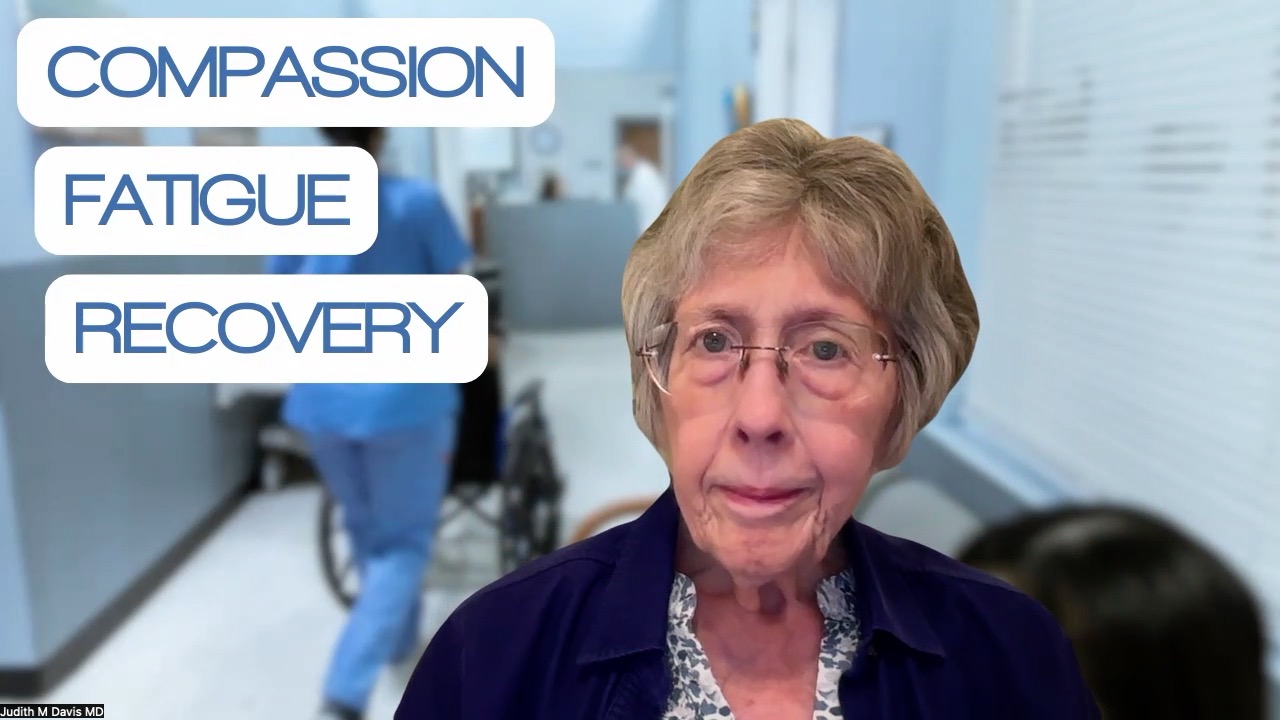
Why Compassion Fatigue Happens—and What Can Help
What is compassion fatigue? It's the emotional and physical exhaustion that can result from caring deeply for others who are suffering. It often affects teachers, healthcare workers, caregivers, and anyone in helping roles, and can lead to a sense of numbness, burnout, or feeling overwhelmed by others’ needs.
If you are someone who has one of these occupations, or you're taking care of an ill or disabled relative or friend, you may find yourself caring less about them. Unlike burnout, which occurs gradually over time to those who are overworked (and, for some, undervalued), compassion fatigue can occur rapidly. You find yourself feeling emotionally and physically tired. You may feel numb and irritable. And if you don't understand what's happening, you may feel guilty that you've stopped caring and wanting to help.
Why do some people develop compassion fatigue while others don't?
Boundary Problems
I believe that some who are susceptible have boundary problems. They (unwittingly) allow the pain and suffering of those they're caring for to diffuse into their own minds, overwhelming them and rendering them incapable of feeling compassion for those they are caring for.
Taking on More than they Should
Some people, in their enthusiasm for their work, assume more responsibility than they should. This is not a problem with boundaries but, rather, an overestimation of their capability. The demands of this extra responsibility can become overwhelming, leading to compassion fatigue.
Anger
Teachers, whose desire to care for their students is part of their motivation to choose this occupation, are nowadays sometimes faced with students who are impolite and unruly. The mind perceives these behaviors as attacks, to which the automatic response is aggression. Yet teachers can't fight back. Also, they are often not supported by administration. An unruly child sent out of the classroom typically returns, unchanged. Frustration and anger interfere with teachers' capacity to feel compassion for these troubled students.
Your Inner Guide Can Help
How? Boundary problems and overestimation of one's abilities are internal problems that your Inner Guide is aware of and is working to eliminate. Anger at external circumstances is an external problem that you Inner Guide can help you avoid, remove yourself from, or advocate for change, depending on the circumstances. If you already have an Inner Guide and are giving it regular time to work, it will help you when these situations arise. And if you don’t yet have an Inner Guide, I’ll soon be offering a new way for you to acquire one.