Do you ever wonder, when you're having a very strong feeling about something, why that feeling is so strong? Perhaps not, perhaps you assume that's just how life is. When a driver cuts you off, isn't it normal to feel furious? When you see a sad movie, isn't it normal to feel gripped with grief? And when something panics you, like discovering that you don't have quite enough money to pay for necessities, doesn't it make sense to be frightened? Often, no. In many of these situations, the reaction is larger than the situation alone would justify.
When the Reaction Feels Too Strong
Occasionally someone does recognize that their reaction is excessive. A man who reacted to a bad driver with shaking rage had a momentary thought that he need not have felt that way. A woman watching a sad movie was so overcome with grief that she had to leave the theater in the middle of the show. She wondered why she had such an intense reaction to the film. A person whose anxiety escalates into panic wonders why others don't feel the same way. What is it about them, that they can remain so calm? Or about him, that he can't?
Your Emotional Reservoirs
We all have reservoirs of feelings in our mind: reservoirs of anger, sadness, and anxiety, that originated and enlarged as we grew and developed.
How Reservoirs Form in Childhood
All small children have traumatic experiences because everything is so new to them that they're easily overwhelmed. When they have a stronger reaction than they can bear, the excess feeling is split off and doesn't enter their awareness. It goes into a reservoir, and remains there, out of awareness. Here is an example of a reservoir of anxiety.

Every time a new unbearably frightening experience occurs, the unbearable portion of the fear flows into the reservoir and enlarges it. The greater the number and intensity of early frightening experiences, the larger the reservoir of anxiety.
Now, whenever we feel anxious about something—about anything—a portion of the split‑off anxiety in the reservoir is evoked. Because it is associatively connected, it flows into the current feeling and greatly increases the anxiety that we experience.
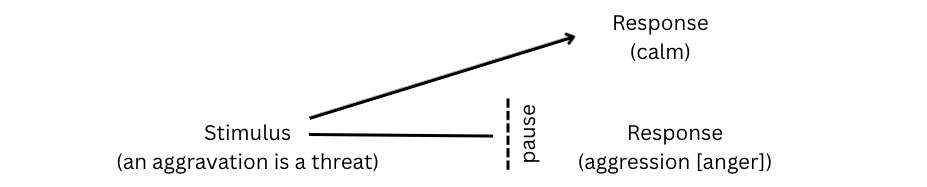
As a result, you may feel panic about discovering that you don't have quite enough money to pay for necessities, rather than calmly assessing the situation and coming up with a solution. The other reservoirs work the same way.
(These diagrams are not illustrating specific places in the brain. They are illustrating the concept of the reservoir and its interaction with other parts of the mind.)
How to Avoid Overly Intense Reactions
- If you are able to see when you are having an exaggerated reaction to something, just reminding yourself about your reservoir and its contribution to that reaction will help a lot.
- Better yet, you can create a new mental pathway that gradually eradicates the reservoirs while providing immediate periods of peacefulness and calm. I explain how to do this in the Stress-Free Formula: https://www.communityforwellbeing.com/the-stress-free-formula