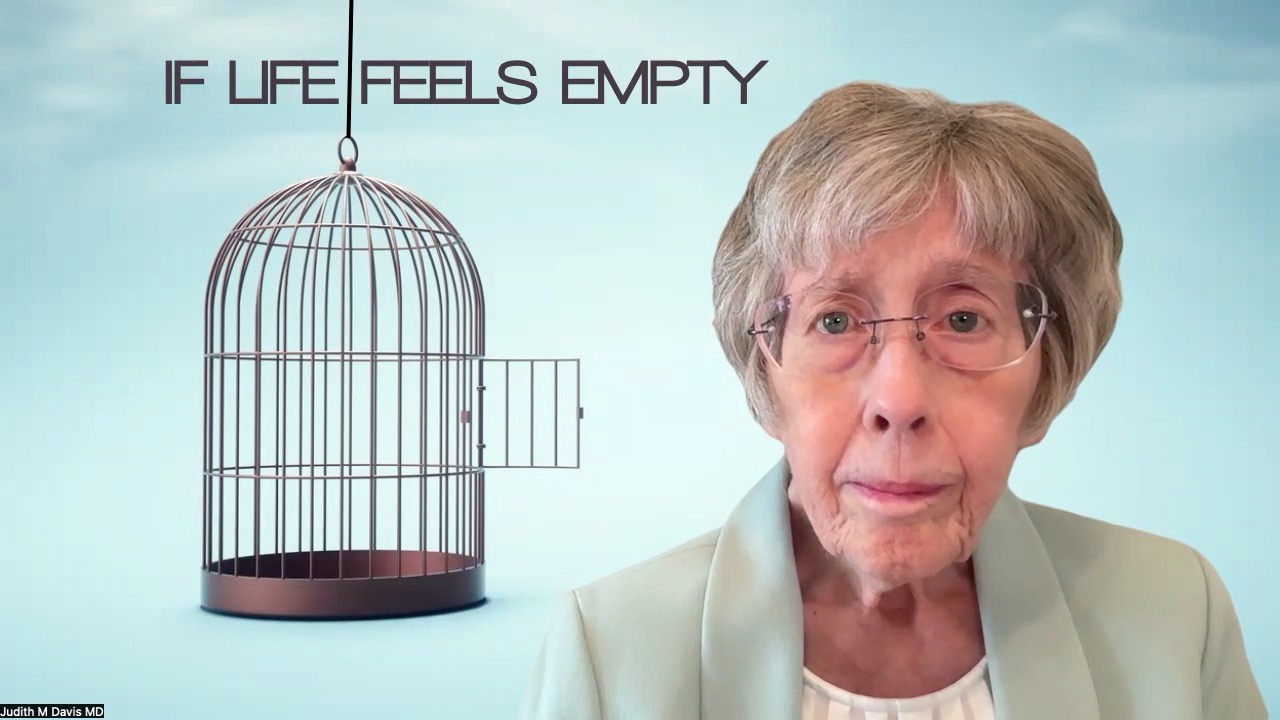
Do you remember a time when you knew exactly why you got up in the morning? When your work felt meaningful, your relationships felt vital, and you had a clear sense of where you were headed? Perhaps that time feels distant now.
Or perhaps you can't remember it at all. Perhaps you have never quite known what your purpose is — what genuinely matters to you, what you are here for, what would make your life feel meaningful. If that's the case, you are not alone — and you are not unusual.
The absence of purpose is one of the quietest and most disorienting forms of suffering. Unlike grief or anxiety, it doesn't announce itself dramatically. It creeps in slowly — a growing flatness, a sense of going through the motions, a feeling that something essential is missing without quite knowing what it is.
There was a time when I felt that I wasn't operating on all cylinders. It was for a different problem that has now been resolved. But I remember how it felt: that something essential was missing without knowing what it was.
Two Paths to the Same Place
There are two very different ways that people arrive at a life without purpose.
The first way is loss. Retirement, children leaving home, a career that has stopped feeling meaningful — these transitions can strip away the roles that gave life its value. For teachers, this can be particularly painful. Teaching is, for most who choose it, a calling, not just a job. When the joy of that calling is buried under administrative pressure, difficult working conditions, or simple exhaustion, the loss can feel profound. Not just burnout, but something closer to grief.
The second way that people arrive at a life without purpose is more subtle, and often more painful: never having developed a sense of meaningful purpose in the first place. This is more common than people realize.
When Meaningful Purpose Never Had a Chance to Develop
Some people have carried heavy burdens from a very young age: difficulties at home or early traumas that they were too young to understand or deal with. Some of these burdens they are aware of. Others they are not because the experiences were so traumatic that they developed amnesia for them. For these children their purpose then was simply to survive, and as adults, to get through the day. There was no mental space in which they could appreciate an area of special interest or a skill for which they had natural talent.
As a result, these individuals have grown into adults who function adequately, and sometimes very well, but who lack the pleasure of having a meaningful purpose. Some of them may not even recognize that something is missing. They may never have experienced the feeling of genuine engagement or meaning that others seem to take for granted. They may assume this is simply how life is.
Others may feel as I did: that somehow something is missing. But they don't know what it is or how to fix it.
The Way Forward
Whether you have lost your sense of purpose or never fully found it, the pathway forward is the same. Purpose needs to be uncovered — freed from the accumulated weight of stress and unresolved feeling that has been obscuring it.
Creating a new mental pathway — one that gradually diminishes that accumulated weight — can restore the inner conditions that allow for a meaningful purpose to emerge.
For those who have lost their purpose, it can return – or a new one may appear. For those who never found it, it can emerge for the first time. Either way, the change can be profound. My problem got resolved as I created my own new mental pathway. I can show you how to create yours. Visit: https://www.communityforwellbeing.com/the-stress-free-formula